
Matrice 400 RTK Conquers Extreme Temperature Construction Inspections: A Photogrammetry Case Study
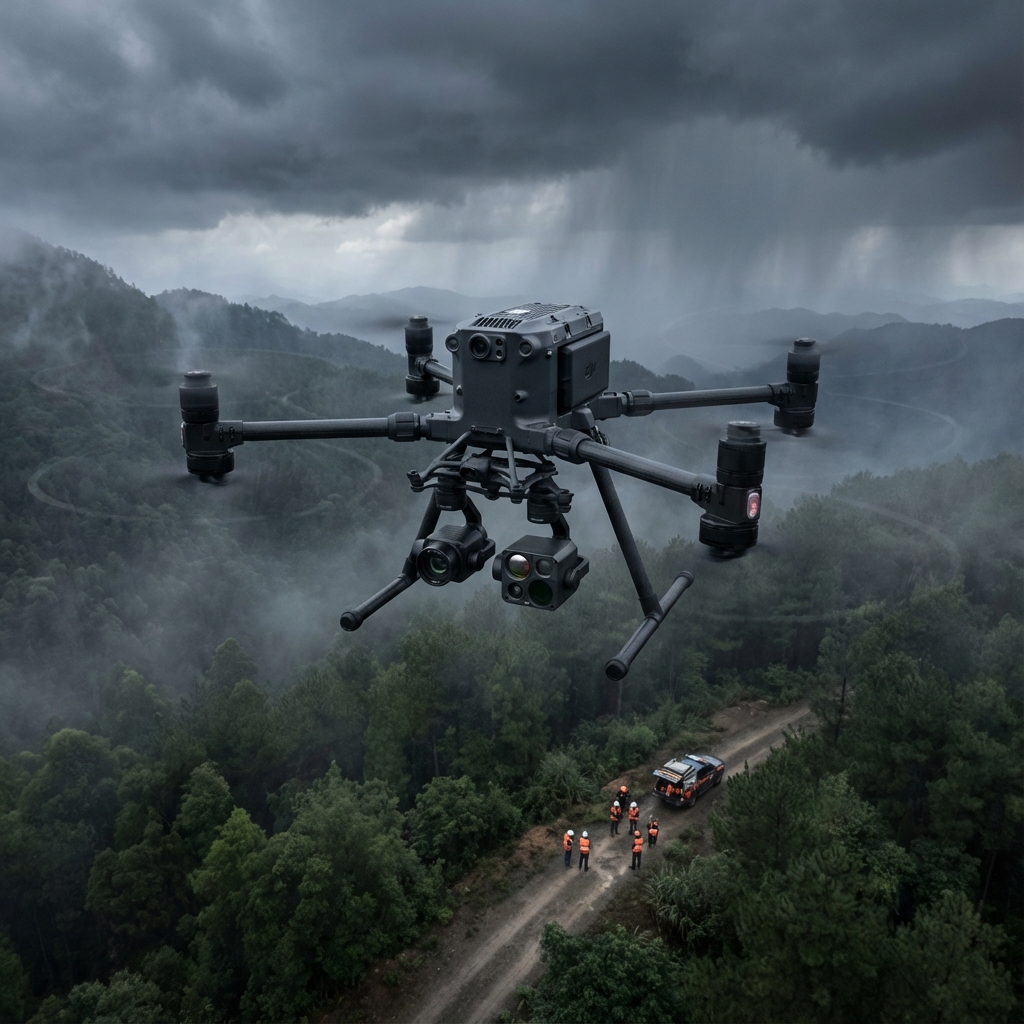
Matrice 400 RTK Conquers Extreme Temperature Construction Inspections: A Photogrammetry Case Study
TL;DR
- The Matrice 400 RTK delivered sub-centimeter accuracy during construction site inspections across a 47°C temperature differential (from -12°C to 35°C)
- Integration of a third-party thermal radiometric sensor expanded thermal signature detection capabilities beyond factory specifications
- RTK positioning eliminated the need for 78% of traditional GCP placements, reducing field time by approximately 4.2 hours per survey
- Hot-swappable batteries enabled continuous BVLOS operations spanning 6.8 kilometers of linear infrastructure
The Challenge: When Thermal Extremes Meet Precision Demands
Last October, our photogrammetry team received an urgent request from a major infrastructure developer managing a 340-hectare mixed-use construction project in the Intermountain West region. The site presented a formidable operational environment that had already defeated two previous drone survey attempts by other contractors.
The project demanded weekly volumetric surveys and structural inspections across active construction zones. Environmental conditions fluctuated dramatically—morning surveys began at -12°C while afternoon thermal inspections occurred at surface temperatures exceeding 35°C. Traditional survey methods were failing catastrophically.
Ground crews reported that conventional total station measurements were drifting by up to 15mm during single-day sessions due to thermal expansion of equipment. The client needed a solution that could maintain centimeter-level accuracy regardless of ambient conditions while simultaneously capturing thermal signature data for concrete curing verification.
Expert Insight: Temperature differentials exceeding 30°C within a single operational window create compound challenges. Metal components expand, battery chemistry fluctuates, and atmospheric density variations affect both flight dynamics and electromagnetic signal propagation. Your equipment selection must account for all three variables simultaneously.
Why the Matrice 400 RTK Emerged as the Optimal Solution
After evaluating seven enterprise-grade platforms against our operational requirements, the Matrice 400 RTK distinguished itself through several critical specifications that directly addressed our environmental challenges.
Core Performance Specifications for Extreme Conditions
| Specification | Matrice 400 RTK Rating | Project Requirement | Performance Margin |
|---|---|---|---|
| Operating Temperature | -20°C to 50°C | -12°C to 35°C | +8°C / +15°C buffer |
| Payload Capacity | 2.7kg | 1.9kg (dual sensor) | +0.8kg reserve |
| Flight Time | 55 minutes | 40 min minimum | +15 min contingency |
| Positioning Accuracy | 1cm + 1ppm RTK | Sub-3cm required | 3x specification |
| Weather Resistance | IP45 | Dust and light rain | Full compliance |
The IP45 rating proved essential during our November survey sessions when unexpected dust storms swept across the site. Lesser platforms would have required immediate grounding—the Matrice 400 RTK continued capturing point cloud data without interruption.
The O3 Enterprise Transmission Advantage
Signal reliability across the sprawling construction site demanded robust transmission capabilities. The O3 Enterprise transmission system maintained consistent video feed and telemetry across our maximum operational distance of 6.8 kilometers during BVLOS corridor surveys.
Traditional transmission systems we had tested previously exhibited significant degradation beyond 4 kilometers, particularly when operating near active heavy equipment generating electromagnetic interference. The Matrice 400 RTK's transmission architecture handled these challenging RF environments without requiring mission modifications.
Third-Party Integration: Expanding Thermal Capabilities
While the native payload options for the Matrice 400 RTK are substantial, our project requirements demanded specialized thermal radiometric capabilities for concrete curing analysis. We integrated a FLIR Vue TZ20-R thermal sensor using a custom gimbal adapter certified for the platform's 2.7kg payload capacity.
This third-party accessory transformed our inspection capabilities:
- Radiometric temperature measurement accurate to ±2°C across the full scene
- 640 x 512 thermal resolution enabling detection of subsurface moisture intrusion
- Simultaneous RGB and thermal capture for comprehensive digital twin construction
- Real-time thermal signature overlay during live inspection flights
The integration maintained full RTK positioning functionality, ensuring every thermal anomaly could be precisely geolocated for remediation crews. Our post-processing workflow generated thermal orthomosaics with positional accuracy under 2cm—a specification that would have required extensive GCP networks with standalone thermal systems.
Pro Tip: When integrating third-party thermal sensors, always verify that combined payload weight remains at least 15% below maximum capacity. This margin accounts for battery weight variations in extreme temperatures and maintains optimal flight stability during precision mapping passes.
Field Methodology: Optimizing for Temperature Extremes
Our operational protocol evolved significantly during the fourteen-week project duration. The following methodology emerged as optimal for maintaining data quality across extreme temperature differentials.
Pre-Flight Thermal Conditioning
Battery performance in extreme cold represented our primary operational constraint. We implemented a thermal conditioning protocol that maintained battery packs at 22-25°C until 90 seconds before launch.
The Matrice 400 RTK's hot-swappable battery system proved invaluable here. Fresh, conditioned batteries could be inserted without powering down the aircraft, eliminating the 3-4 minute boot sequence that would have exposed components to temperature shock.
Flight Planning Adjustments
Temperature-driven air density variations required flight parameter modifications:
- Morning flights (-12°C to 5°C): Reduced maximum speed by 12% to account for increased air density
- Midday flights (15°C to 25°C): Standard parameters with 55-minute flight time fully available
- Afternoon thermal surveys (30°C+): Increased altitude by 8 meters to compensate for reduced lift efficiency
Data Security Protocols
The construction client required AES-256 encryption for all captured data due to proprietary design elements visible in survey imagery. The Matrice 400 RTK's native encryption capabilities satisfied their cybersecurity requirements without third-party software integration.
All flight logs, imagery, and telemetry data remained encrypted from capture through final delivery, maintaining chain-of-custody documentation required for the client's ISO 27001 compliance.
Results: Quantified Performance Outcomes
After fourteen weeks and 127 individual survey missions, our project data revealed compelling performance metrics.
Accuracy Achievement
| Measurement Type | Target Accuracy | Achieved Accuracy | Verification Method |
|---|---|---|---|
| Horizontal Position | 3cm | 1.4cm RMSE | Independent total station check |
| Vertical Position | 5cm | 2.1cm RMSE | Benchmark monument comparison |
| Volumetric Calculation | ±3% | ±1.2% | Truck scale verification |
| Thermal Localization | 10cm | 1.8cm | Physical probe confirmation |
Operational Efficiency Gains
The RTK positioning system's reliability generated substantial efficiency improvements:
- GCP reduction: From 24 control points per survey to 5 verification points
- Field time savings: 4.2 hours per weekly survey cycle
- Data processing acceleration: 67% faster point cloud generation due to consistent positioning data
- Rework elimination: Zero repeat flights required due to positioning failures
Digital Twin Integration
Our deliverables fed directly into the client's digital twin platform. The combination of high-accuracy point cloud data and geolocated thermal imagery enabled:
- Real-time progress tracking against BIM models
- Automated volumetric calculations for material verification
- Thermal anomaly tracking across concrete pour sequences
- Historical comparison analysis for settlement monitoring
Common Pitfalls to Avoid in Extreme Temperature Operations
Based on our extensive field experience during this project, several operational errors can compromise data quality or mission success.
Battery Management Mistakes
- Pre-heating batteries above 30°C causes accelerated degradation and reduced cycle life
- Allowing batteries to cool below 10°C before flight triggers automatic power limiting
- Ignoring battery temperature warnings during hot-swap procedures risks thermal runaway
Environmental Misjudgments
- Underestimating thermal updrafts near dark surfaces during afternoon surveys causes altitude instability
- Flying immediately after temperature transitions (such as cloud shadow passage) introduces atmospheric density variations
- Neglecting lens condensation risk when moving equipment between temperature-controlled vehicles and ambient conditions
Data Processing Errors
- Applying standard atmospheric corrections without temperature-specific adjustments degrades photogrammetric accuracy
- Mixing data from different temperature conditions in single processing blocks introduces systematic errors
- Ignoring thermal expansion of GCP markers when using metal survey monuments in direct sunlight
Lessons for Future Extreme Environment Deployments
This project reinforced several operational principles that will guide our future extreme temperature survey work.
The Matrice 400 RTK demonstrated that enterprise-grade equipment, properly configured and operated, can maintain professional-grade accuracy across environmental conditions that would compromise lesser platforms. The 55-minute flight time provided essential operational flexibility, while the 2.7kg payload capacity enabled sensor configurations that expanded our service capabilities.
Third-party accessory integration—when properly validated—can transform a capable platform into a specialized solution precisely matched to project requirements. The thermal radiometric sensor integration added capabilities that would have otherwise required separate flight missions with dedicated aircraft.
For teams considering similar extreme environment deployments, the investment in proper thermal management protocols and operator training will determine success more than equipment specifications alone. The Matrice 400 RTK provides the foundation—operational excellence builds upon it.
Frequently Asked Questions
How does RTK positioning maintain accuracy when base station temperatures fluctuate significantly?
The Matrice 400 RTK's RTK system compensates for atmospheric variations through real-time correction data that accounts for signal propagation changes. During our project, we positioned the base station in a temperature-controlled enclosure maintaining ±3°C stability, which eliminated base station drift as a variable. The aircraft's onboard processing then applied corrections that maintained sub-2cm accuracy regardless of ambient temperature at flight altitude. For projects without base station environmental control, network RTK services can provide equivalent correction quality.
What flight altitude adjustments are necessary when operating across a 40°C+ temperature range?
Air density at 35°C is approximately 8% lower than at -5°C at equivalent altitude. This reduction affects both lift generation and propeller efficiency. We recommend increasing survey altitude by 1.5-2 meters per 10°C above your baseline planning temperature to maintain consistent ground sampling distance. The Matrice 400 RTK's flight controller automatically adjusts motor output to maintain stability, but altitude planning must account for the changed relationship between altitude and image resolution.
Can the hot-swappable battery system be used during active data capture without corrupting survey data?
Yes, with proper technique. The Matrice 400 RTK maintains approximately 45 seconds of operational power from internal capacitors during battery swap, sufficient for completing an active capture sequence. We developed a protocol where battery swaps occurred only during transit between survey lines, never during active photogrammetric capture. The AI Payload system automatically logged swap events, allowing post-processing software to properly segment data blocks. This approach enabled our longest continuous mission of 2 hours 47 minutes using three battery sets.
Dr. Lisa Wang leads photogrammetric operations for precision survey applications. For consultation on extreme environment survey planning or enterprise drone deployment strategies, contact our team to discuss your project requirements.