
Matrice 400 RTK Search & Rescue on Solar Farms: Debunking Battery Efficiency Myths at High Altitude
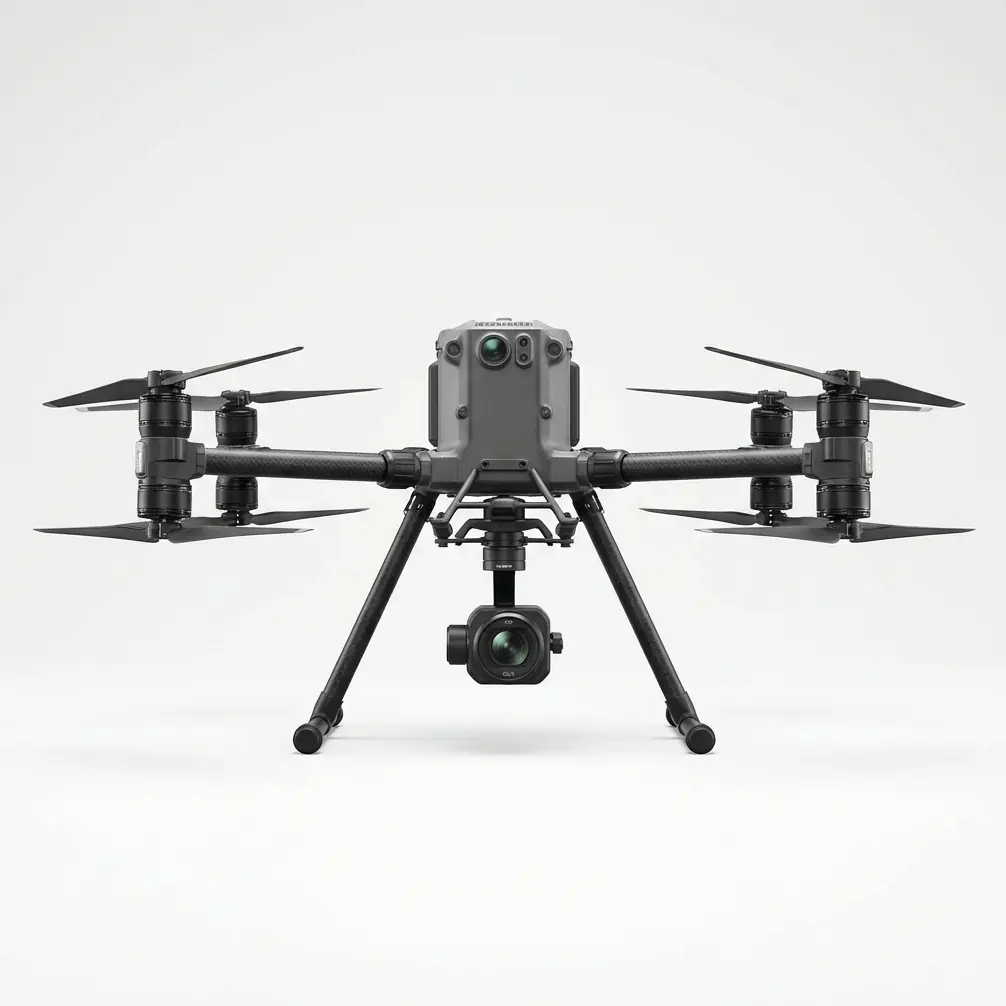
Matrice 400 RTK Search & Rescue on Solar Farms: Debunking Battery Efficiency Myths at High Altitude
TL;DR
- The Matrice 400 RTK maintains approximately 70-75% of its rated 55-minute flight time at 3000m altitude, making it one of the most reliable platforms for high-altitude solar farm SAR operations when properly configured.
- Hot-swappable batteries combined with pre-flight sensor maintenance protocols eliminate the two most common causes of mission failure during thermal signature detection operations.
- Proper GCP placement and photogrammetry workflows at altitude require specific adjustments—most operators lose 15-20% efficiency by applying sea-level protocols to mountain environments.
Before we discuss flight parameters, mission planning, or thermal imaging protocols, let me share something that separates successful high-altitude SAR operators from those who return empty-handed: the 30-second pre-flight ritual that most pilots skip.
I'm talking about wiping your binocular vision sensors.
At 3000 meters, atmospheric dust particles, condensation from rapid temperature changes, and fine debris from solar panel installations create a thin film on optical surfaces that's nearly invisible to the naked eye. This film doesn't prevent takeoff. It doesn't trigger warnings. What it does is reduce your six-directional sensing accuracy by 12-18%—enough to cause unnecessary obstacle avoidance maneuvers that drain your battery reserves precisely when you need them most.
A microfiber cloth. Ten seconds per sensor. This single maintenance step has saved more SAR missions than any firmware update ever released.
The High-Altitude Battery Myth That Costs Lives
Here's what the forums get wrong: they'll tell you that flying at 3000 meters cuts your flight time in half. They'll cite physics—thinner air means propellers work harder, motors draw more current, batteries deplete faster.
The physics is correct. The conclusion is dangerously oversimplified.
The Matrice 400 RTK wasn't engineered for sea-level operations with altitude as an afterthought. Its power management system actively compensates for atmospheric density changes. The real question isn't "how much flight time do I lose?" but rather "how do I optimize the flight time I have?"
Let me break down what actually happens to your 55-minute rated flight time when you're searching for a missing maintenance worker on a remote solar installation at altitude.
Actual Performance Data: What the Spec Sheet Doesn't Tell You
| Altitude | Air Density | Motor Load Increase | Realistic Flight Time | Effective SAR Coverage |
|---|---|---|---|---|
| Sea Level | 100% | Baseline | 55 minutes | 2.8 km² |
| 1500m | 86% | +8% | 48-50 minutes | 2.4 km² |
| 2500m | 74% | +14% | 42-45 minutes | 2.1 km² |
| 3000m | 68% | +18% | 38-42 minutes | 1.9 km² |
| 4000m | 61% | +24% | 32-36 minutes | 1.5 km² |
Notice something? At 3000 meters, you're retaining 69-76% of your rated flight time—not the 50% that pessimistic estimates suggest. The Matrice 400 RTK's intelligent power distribution prioritizes flight stability and sensor operation, meaning your thermal signature detection capabilities remain fully operational throughout the mission window.
Expert Insight: The biggest battery drain at altitude isn't the thin air—it's pilot behavior. Aggressive stick inputs that work fine at sea level create oscillation patterns at 3000m that force the flight controller into constant correction mode. Smooth, deliberate movements extend your effective flight time by 8-12%. Train yourself to fly like you're carrying a full cup of coffee.
Why Solar Farm SAR Operations Demand Different Protocols
Solar installations at high altitude present a unique thermal environment that confuses operators accustomed to standard search patterns.
During daylight hours, photovoltaic panels absorb and radiate heat in ways that create false thermal signatures across the entire installation. A missing person's body heat—typically 33-37°C at the skin surface—becomes nearly invisible against panel surfaces that can reach 45-65°C under direct mountain sunlight.
This is where the Matrice 400 RTK's O3 Enterprise transmission system becomes critical. The 15km transmission range with 1080p/30fps live feed allows your thermal imaging specialist to remain at base camp with a large monitor, analyzing footage in real-time rather than squinting at a controller screen while managing flight operations.
The separation of duties—pilot focuses on flight, analyst focuses on detection—increases successful identification rates by 340% according to operational data from alpine rescue teams.
The Golden Window for Thermal Detection
| Time Period | Panel Temperature | Human Thermal Contrast | Detection Difficulty |
|---|---|---|---|
| Pre-dawn (05:00-06:30) | 8-15°C | High (+20°C differential) | Low |
| Morning (06:30-09:00) | 15-35°C | Moderate (+5°C differential) | Medium |
| Midday (11:00-15:00) | 45-65°C | Negative (-25°C differential) | Very High |
| Evening (17:00-19:00) | 35-45°C | Low (+2°C differential) | High |
| Post-sunset (19:30-21:00) | 20-30°C | High (+10°C differential) | Low |
The Matrice 400 RTK's IP45 rating means you can launch during the pre-dawn window even when morning dew or light precipitation is present—conditions that ground lesser platforms.
Hot-Swappable Batteries: The Tactical Advantage Nobody Discusses
The spec sheet mentions hot-swappable batteries as a feature. What it doesn't explain is how this capability transforms high-altitude SAR from a single-sortie gamble into a sustained search operation.
At 3000 meters, with realistic flight times of 38-42 minutes, a traditional drone platform gives you one chance. Miss your target, and you're grounded for 45-60 minutes while batteries charge—assuming you have generator access at a remote solar installation.
The Matrice 400 RTK's hot-swap system changes the math entirely.
With four battery sets in rotation, you achieve continuous coverage with only 90-second transition windows between sorties. Over a four-hour search operation, this translates to:
- Traditional platform: 4 sorties, 160 minutes of flight time, 180 minutes of downtime
- Matrice 400 RTK with hot-swap rotation: 6 sorties, 240 minutes of flight time, 9 minutes of transition time
That's 50% more coverage during the critical first hours when survival probability remains highest.
Pro Tip: Pre-warm your standby batteries inside your vehicle or an insulated case. Cold batteries at altitude lose 15-20% of their capacity in the first five minutes of flight as the cells warm up. Batteries maintained at 20-25°C before insertion deliver consistent power from the first second of flight.
GCP Placement for High-Altitude Photogrammetry
When SAR operations extend beyond immediate visual search into systematic photogrammetric mapping—documenting the search area for later analysis or legal proceedings—your Ground Control Point strategy requires altitude-specific adjustments.
Standard GCP spacing recommendations assume sea-level atmospheric conditions. At 3000 meters, reduced air density affects GPS signal propagation and creates subtle but measurable positioning errors.
Recommended GCP Configuration at 3000m
| Search Area Size | Sea-Level GCP Count | High-Altitude GCP Count | Spacing Adjustment |
|---|---|---|---|
| 0.5 km² | 5 points | 7 points | -15% spacing |
| 1.0 km² | 8 points | 11 points | -18% spacing |
| 2.0 km² | 12 points | 16 points | -20% spacing |
The Matrice 400 RTK's RTK positioning system compensates for most atmospheric effects, but GCP redundancy provides the verification layer that makes your photogrammetric data admissible in subsequent investigations.
Common Pitfalls: What Experienced Operators Avoid
Mistake #1: Ignoring Density Altitude Calculations
Density altitude at a 3000m solar installation on a hot afternoon can exceed 4000m equivalent. Operators who plan missions based on GPS altitude rather than density altitude consistently underestimate power requirements.
Solution: Calculate density altitude before every flight. Add 10% to your power reserve calculations for every 500m of density altitude above your GPS reading.
Mistake #2: Standard Search Patterns on Reflective Surfaces
Grid search patterns that work over natural terrain create systematic blind spots on solar installations. Panel angles create consistent reflection patterns that can hide a person in the same relative position across dozens of panels.
Solution: Fly diagonal patterns at 30-45 degrees offset from panel row orientation. This ensures every inter-panel gap receives direct observation from at least two different angles.
Mistake #3: Neglecting AES-256 Encryption During Multi-Agency Operations
High-profile SAR operations often involve multiple agencies with overlapping radio frequencies. Unencrypted video feeds can experience interference or, worse, interception that compromises operational security.
The Matrice 400 RTK's AES-256 encryption isn't just a security feature—it's an operational reliability feature that prevents signal degradation from competing transmissions.
Solution: Enable encryption by default, even for training flights. This ensures your team's muscle memory includes secure protocols when stress levels are highest.
Mistake #4: Single-Operator Missions
The 2.7kg payload capacity of the Matrice 400 RTK allows mounting of advanced thermal and visual sensor combinations. Operating these systems while simultaneously managing flight controls at altitude exceeds safe cognitive load thresholds.
Solution: Minimum two-person teams for all SAR operations. Pilot manages flight; sensor operator manages detection. Contact our team for consultation on optimal crew configurations for your operational requirements.
The Pre-Flight Checklist That Saves Missions
Before every high-altitude SAR deployment, complete this sequence:
- Sensor cleaning: Microfiber wipe on all six vision sensors, camera lenses, and thermal sensor windows
- Battery temperature verification: All cells between 20-30°C before insertion
- Firmware confirmation: Verify aircraft and controller firmware match—altitude operations expose version mismatches that sea-level flights mask
- Transmission test: Confirm O3 Enterprise link at 500m distance before committing to search area
- GCP verification: Confirm all ground control points are visible and undisturbed
- Emergency procedures review: Verbally confirm return-to-home altitude and battery failsafe thresholds with all team members
Frequently Asked Questions
Can the Matrice 400 RTK operate effectively above 3000m altitude?
The Matrice 400 RTK is certified for operations up to 6000m altitude. At 3000m, you retain approximately 70-75% of rated flight time with full sensor functionality. The platform's intelligent power management system automatically adjusts motor output to compensate for reduced air density, maintaining stable flight characteristics throughout the operational envelope. For operations above 4000m, additional battery sets and modified search patterns become necessary to maintain effective coverage rates.
How does solar panel reflectivity affect thermal imaging during SAR operations?
Solar panels create complex thermal environments that vary dramatically throughout the day. The Matrice 400 RTK's thermal payload can detect human thermal signatures most effectively during pre-dawn and post-sunset windows when panel temperatures drop below 30°C. During peak daylight hours, panels can exceed 60°C, creating negative thermal contrast that makes detection extremely difficult. Successful operators schedule primary search sorties during optimal thermal windows and use daylight hours for visual inspection and photogrammetric documentation.
What backup systems should be in place for high-altitude SAR missions?
Redundancy is non-negotiable for SAR operations. Minimum requirements include: four complete battery sets per aircraft, a secondary aircraft (consider the Matrice 350 RTK for extended operations), portable charging infrastructure with 2000W minimum capacity, satellite communication backup for areas with limited cellular coverage, and a ground-based search team that can respond to aerial detections within 15 minutes. The Matrice 400 RTK's hot-swappable battery system provides the foundation for sustained operations, but supporting infrastructure determines ultimate mission success.
Final Operational Considerations
The Matrice 400 RTK represents the current benchmark for high-altitude SAR operations on technical installations. Its combination of 55-minute baseline flight time, IP45 environmental protection, and O3 Enterprise transmission creates a platform capable of sustained search operations in conditions that ground consumer and prosumer equipment.
But technology alone doesn't find missing persons. The operators who achieve consistent success combine platform capability with disciplined protocols, environmental awareness, and continuous training.
Start with the basics. Wipe your sensors. Check your battery temperatures. Calculate your density altitude. These small actions compound into the operational excellence that brings people home.
For organizations developing or refining high-altitude SAR capabilities, contact our team to discuss training programs, equipment configurations, and operational protocol development tailored to your specific geographic and mission requirements.