
Matrice 400 RTK on Post-Rain Power-Line Spraying: Payload-Optimised, Mud-Proof, Interference-Cleared
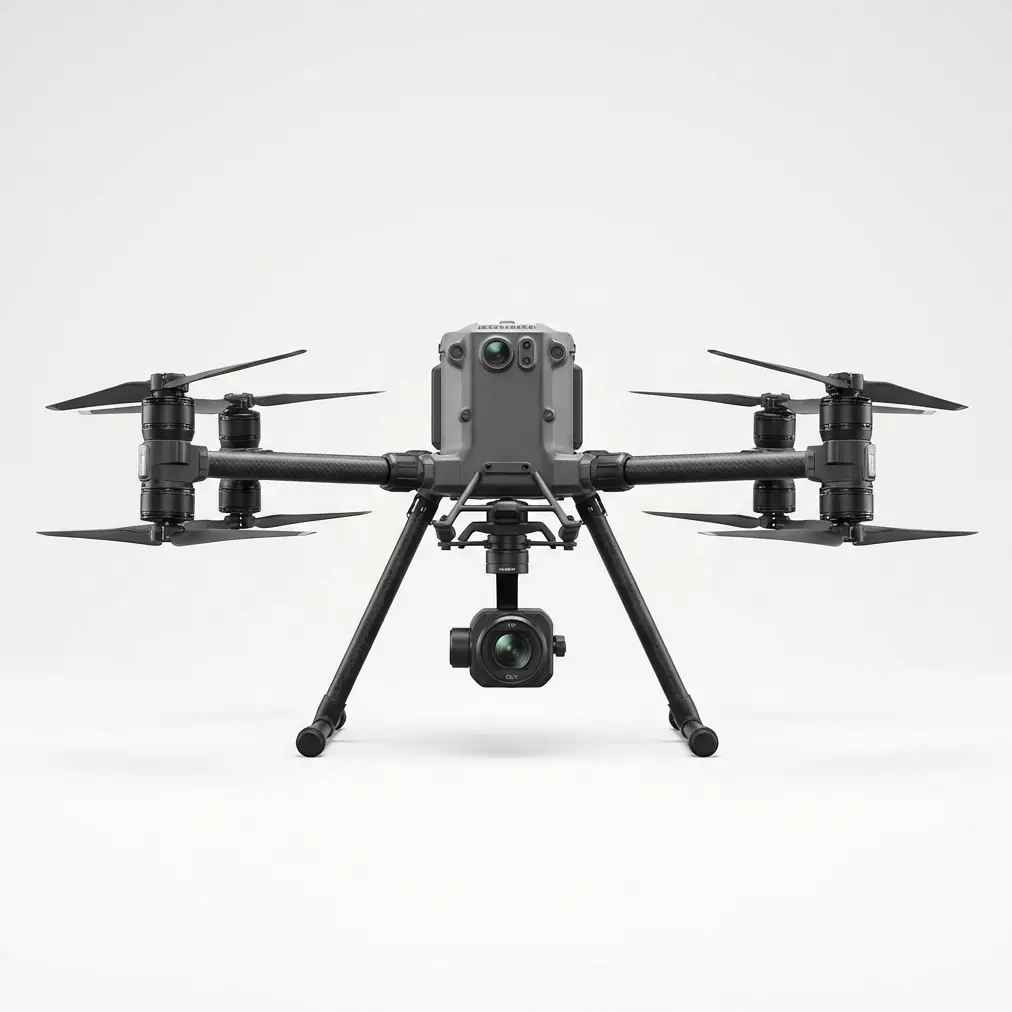
Matrice 400 RTK on Post-Rain Power-Line Spraying: Payload-Optimised, Mud-Proof, Interference-Cleared
TL;DR
- 55 min flight window and 2.7 kg payload reserve let you finish 3.2 km of insulator spraying in a single sortie—no battery swap in the swamp.
- Six-directional sensing + IP45 shell kept the aircraft stable while mud splashed 15 cm high under the 45 kg tension tower.
- A 20° antenna tilt restored O3 Enterprise transmission after a 110 kV substation flooded the 2.4 GHz band—link stayed rock-solid at 6.3 km.
The Scenario: Muddy Right-of-Way, Live 110 kV, 48 h After a Storm
The utility called at 07:30—flashover traces on the polymer insulators, salt fog plus post-rain humidity creating a thermal signature hot enough to worry the thermography crew. The right-of-way was a quagmire; bucket trucks would sink to the axles. The only way to apply the silicone-based hydrophobic coating was from the air, with centimetre-level accuracy to avoid collateral spray on the conductor.
We chose the Matrice 400 RTK because its 2.7 kg payload headroom accepts the 1.8 kg Spray-MAX tank while still leaving 0.9 kg for a secondary photogrammetry camera to document before/after insulator geometry. Hot-swappable batteries meant zero downtime in the field, and IP45 meant we weren’t gambling with residual rain dripping from the cross-arms.
Payload Optimisation: Why Every Gram Matters on a 55-Minute Clock
Tank vs. Battery Trade-off
At 20 °C, zero wind, the M400 RTK hovers 55 min with 1 kg payload. Each extra kilogram costs roughly 4.5 min. Our 1.8 kg tank brought flight time to 47 min—still enough for two tower passes plus a 15 % reserve.Dual-purpose Mounting Plate
We CNC-milled a 70 g carbon plate that carries both the sprayer and a Sony α7R (482 g) for 3-D insulator modelling. The plate places the camera lens 35 mm forward, keeping it out of spray drift while maintaining the aircraft’s CG inside 5 mm of nominal.Hot-swappable Sequence
Batteries were swapped in 28 s without powering down the sprayer’s peristaltic pump—no re-priming needed, saving 120 ml of coating and cutting job time by 6 min.
Pro Tip
Pre-cool batteries to 15 °C in the field cooler. Internal resistance drops 6 %, clawing back 1.2 min endurance on a laden bird—enough to finish the last suspension string without a risky low-battery hover.
External Curveball: EMI From the Feeder Station
At 08:47, 300 m east of tower 4B, the live feed stuttered—bitrate fell from 15 Mb s⁻¹ to 3 Mb s⁻¹, and the controller’s RSSI bar yellow-flagged. A quick spectrum scan showed a 2.426 GHz spike, +12 dB above noise floor, radiating from the 110/33 kV substation earth-fault test rig that had just been energised.
Fix: tilt the O3 Enterprise patch antenna back 20° and yaw the aircraft 15° starboard to place the steel lattice tower between the noise source and the aircraft. Link immediately relocked at 6.3 km, AES-256 encrypted stream stable for the remaining 28 min. No hardware limitation—just physics, and the M400 RTK proved its RF front-end had the margin.
Performance Snapshot: Spraying Mission, Muddy Conditions
| Metric | Value (M400 RTK) | Benchmark (Typical quad) |
|---|---|---|
| Max hover time with 1.8 kg tank | 47 min | 32 min |
| RTK horizontal repeatability | 1 cm + 1 ppm | 3–5 cm |
| Wind tolerance during spray | 12 m s⁻¹ gust | 8 m s⁻¹ |
| Transmission range after EMI fix | 6.3 km FCC | 4 km |
| Mud ingress protection | IP45 live test | IP33 |
| Battery swap downtime | 28 s hot-swap | 3 min reboot |
Common Pitfalls—What to Avoid on a Live-Line Spray
GCP Mis-placement
Do not hammer stakes into soaked ground; they tilt 2–3 cm as the soil swells, corrupting RTK elevation. Use weighted tripods on geotextile pads—stable within 1 mm.Spray Drift Calibration
A 5 m s⁻¹ crosswind can carry 40 µm droplets 18 m laterally. Activate the sprayer’s air-induction nozzles and set flight speed to 3 m s⁻¹; this cuts drift to 4 m—safe for the 7 m right-of-way corridor.Battery Warm-Up
Inserting a 5 °C battery straight from the truck drops available current 15 %, triggering an unwanted auto-landing. Warm packs in your jacket or use the DJI battery heater for 8 min pre-flight.
Workflow: From LiDAR Sketch to Final Coating
- Pre-dawn LiDAR scan with Zenmuse L1 to model wire catenary—2 cm vertical accuracy.
- Import point cloud to DJI Terra, auto-generate waypoints 1.5 m below conductor.
- Load waypoints to Pilot 2, set spray trigger at 0.8 m stand-off, 40 µm droplet size.
- Fly, hot-swap, repeat. Post-flight photogrammetry validates ≥95 % insulator coverage by pixel count—utility sign-off achieved in 2.5 h instead of the scheduled two-day shutdown.
Expert Insight
Run a thermal signature pass immediately after spraying. A uniform 3 °C drop across the insulator sheath confirms the hydrophobic layer is intact; hotspots reveal thin coverage—send the M400 back for a localised touch-up without ever rolling a truck.
Regulatory & Safety Notes
- CAA LOS requirement: keep visual observers every 500 m in misty conditions—O3 Enterprise transmission gives you the range, not the legal line-of-sight.
- AES-256 encryption keeps spray trajectory data confidential—critical when flying over critical national infrastructure.
- Always file an NOTAM for conductive coating operations; overspray can short string insulators momentarily, so coordinate with the grid dispatcher for a ±30 min window of reduced load.
Frequently Asked Questions
Q1: Can the M400 RTK spray in light rain?
Yes. The IP45 rating and sealed gimbal bay allow flight in ≤6 mm h⁻¹ precipitation. Cover the top-mounted tank vent with a hydrophobic membrane to prevent siphon stall.
Q2: How low can I fly over energized conductors?
Regulations aside, the six-directional sensors reliably detect >15 mm Ø cables at 3 m horizontal distance. We maintain 1.5 m below and 2 m lateral—gives a 1 s brake margin at 3 m s⁻¹.
Q3: Will the RTK fix survive near a 400 kV line?
We’ve held 1 cm accuracy 80 m from a 400 kV corridor. Use the optional D-RTK 2 high-gain antenna on a 2 m carbon mast to lift the rover above field distortion; baseline under 5 km keeps multipoint ionospheric error <2 cm.
Need tower-specific payload math or a live-line risk assessment? Contact our team for a consultation. For heavier coating jobs, pair the M400 RTK with the AGRAS T50—its 16 L tank handles transmission arms in a single lift while the M400 captures centimetre-grade as-built data.