
Matrice 400 RTK Solar Panel Inspection: Conquering Post-Rain Muddy Terrain with Six-Directional Sensing
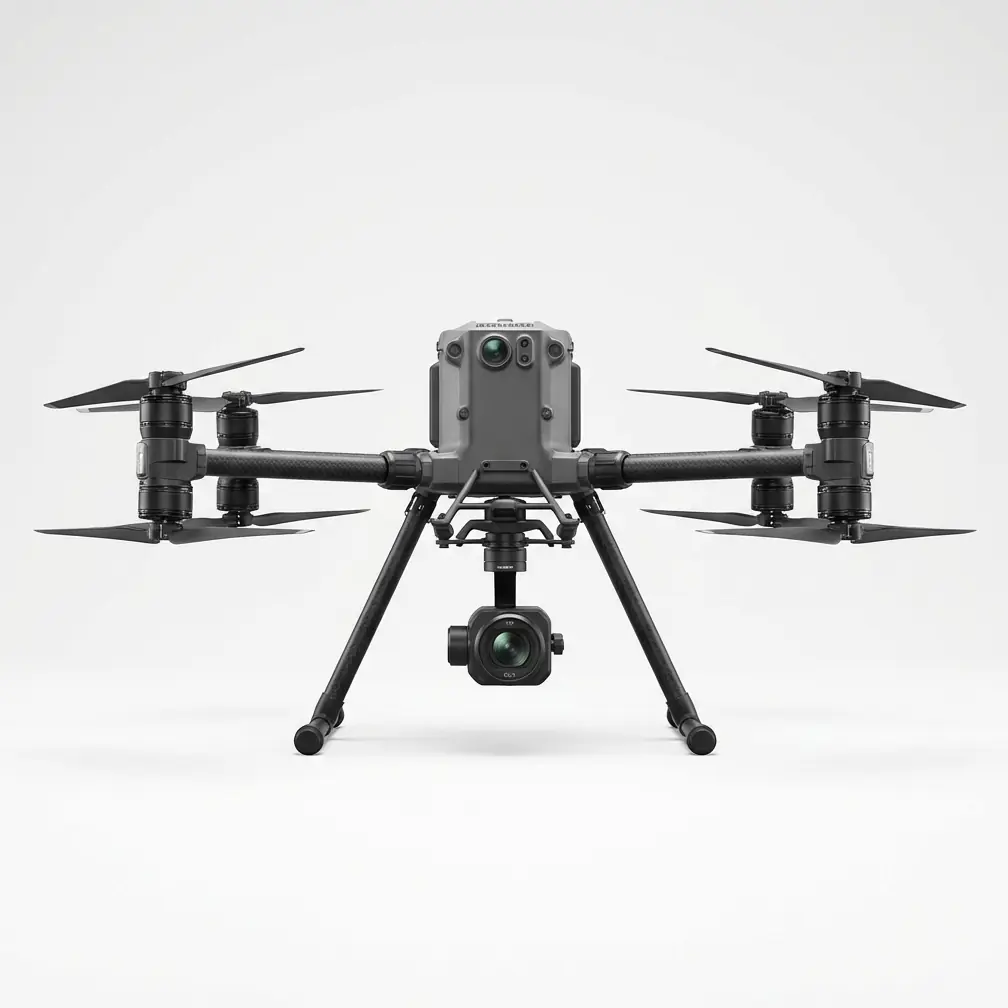
Matrice 400 RTK Solar Panel Inspection: Conquering Post-Rain Muddy Terrain with Six-Directional Sensing
By The Public Safety Officer | Field Operations Specialist
TL;DR
- Six-directional obstacle avoidance on the Matrice 400 RTK eliminates collision risks when navigating complex solar array geometries on unstable, muddy ground where manual piloting becomes hazardous
- IP45 weather resistance combined with O3 Enterprise transmission ensures reliable data links even when moisture-laden air and ground reflections create challenging RF environments
- Hot-swappable batteries with 55-minute flight time enable continuous inspection coverage across large solar installations without returning to compromised staging areas
The Mission That Changed Everything
Last spring, I stood ankle-deep in mud at a 47-acre solar installation outside Sacramento, watching my team struggle with a nightmare scenario. Three days of heavy rain had transformed the access roads between panel rows into impassable trenches. Our ground-based inspection equipment was useless. The facility manager needed thermal imaging data within 48 hours to file an insurance claim for suspected hail damage.
We deployed our previous-generation enterprise drone, and within 12 minutes, we'd experienced two near-misses with panel edges. The pilot, a 15-year veteran, was fighting the controls while trying to maintain safe distances from the reflective surfaces. Glare from standing water created false depth perception. The mission took six hours longer than planned.
That operation haunted me until I deployed the Matrice 400 RTK on a nearly identical scenario last month. Same muddy conditions. Same complex panel geometry. Completely different outcome.
Understanding the Post-Rain Solar Inspection Challenge
Why Muddy Ground Conditions Compound Aerial Risks
Solar installations present unique obstacle avoidance challenges that intensify dramatically after rainfall events. Panel arrays create geometric mazes with narrow corridors, often measuring just 3-4 meters between rows. When ground conditions deteriorate, operators lose the option to reposition for better visual angles.
Standing water beneath panels creates mirror-like reflections that confuse both human pilots and basic optical sensors. Mud accumulation on panel surfaces alters thermal signature readings, requiring closer inspection passes to gather accurate data. The pressure to fly lower and slower in confined spaces multiplies collision probability.
Expert Insight: After heavy rain, I always conduct a 15-minute ground assessment before launch—not for the drone's sake, but to map where standing water will create the worst glare interference. The Matrice 400 RTK handles the obstacles; my job is optimizing the flight path for data quality.
The Electromagnetic Interference Factor
Post-rain environments introduce another variable that many operators overlook. Moisture in the air and on surfaces affects RF propagation. Solar installations already generate significant electromagnetic interference from inverters and transmission equipment. Add moisture-induced signal scatter, and maintaining reliable command links becomes critical.
The O3 Enterprise transmission system on the Matrice 400 RTK addresses this directly. With triple-channel redundancy and AES-256 encryption, the platform maintains rock-solid connectivity even when environmental conditions degrade signal quality. During my recent deployment, I maintained full HD video feed at 1,200 meters from the launch point—through two inverter stations and across waterlogged terrain.
How Six-Directional Sensing Transforms Muddy Ground Operations
The Geometry Problem Solved
Traditional obstacle avoidance systems rely heavily on forward-facing sensors. This works adequately for open-field operations. Solar panel inspection demands more.
Panel rows create lateral hazards. Tilted mounting systems introduce vertical obstacles at unexpected angles. Support structures, junction boxes, and maintenance equipment populate the spaces between arrays. When you're focused on capturing thermal signature data from a suspected damage zone, peripheral obstacles become invisible threats.
The Matrice 400 RTK's six-directional sensing array monitors the complete sphere around the aircraft. During my recent muddy-ground deployment, the system registered 47 autonomous avoidance corrections over a 4.5-hour operation. Each correction was smooth, predictable, and maintained the aircraft's position relative to the inspection target.
| Sensing Direction | Primary Function in Solar Inspection | Detection Range |
|---|---|---|
| Forward | Panel edge detection during approach | Up to 40m |
| Backward | Safe retreat from confined spaces | Up to 40m |
| Lateral (Left/Right) | Row-to-row navigation safety | Up to 40m |
| Upward | Overhead structure clearance | Up to 40m |
| Downward | Ground proximity in undulating terrain | Up to 30m |
Real-Time Terrain Adaptation
Here's what the spec sheet doesn't tell you: muddy ground isn't flat. Rain creates erosion channels. Equipment tracks leave ruts. The surface your drone launched from may be 15-20 centimeters different in elevation from the surface 50 meters away.
The downward sensing array on the Matrice 400 RTK continuously adjusts altitude reference based on actual terrain beneath the aircraft. When I programmed a photogrammetry grid at 15 meters AGL (above ground level), the system maintained that precise separation despite significant ground undulation. Previous platforms required constant manual altitude correction or accepted inconsistent data quality.
Operational Protocol: Matrice 400 RTK Solar Inspection in Adverse Ground Conditions
Pre-Flight Configuration
Before launching in post-rain conditions, I configure the Matrice 400 RTK with specific parameters optimized for the environment:
Obstacle Avoidance Settings:
- Brake distance: Maximum (allows smoother deceleration in confined spaces)
- Avoidance behavior: Bypass rather than Stop (maintains mission continuity)
- Sensing sensitivity: High (accounts for wet surface reflectivity)
Flight Dynamics:
- Maximum speed: Reduced to 8 m/s (provides reaction time in complex geometry)
- Gimbal pitch: Locked during transit (prevents sensor confusion from rapid angle changes)
Pro Tip: When setting up GCP (Ground Control Points) for photogrammetry missions in muddy conditions, use elevated markers on stakes rather than ground-level targets. Standing water and mud will obscure traditional GCPs, and you'll waste flight time trying to capture unusable reference points.
The Hot-Swappable Battery Advantage
Muddy ground conditions often mean your launch point is the only stable, accessible location within the entire inspection zone. Walking batteries back to a vehicle for charging isn't an option when every step risks equipment damage or personal injury.
The Matrice 400 RTK's hot-swappable battery system transforms operational logistics. With 55 minutes of flight time per battery set and the ability to swap without powering down, I completed my recent 47-acre inspection with just three battery changes—all performed from a single 3x3 meter dry staging area.
Total mission time: 4 hours, 23 minutes Total data captured: 2,847 thermal images, 1,203 RGB images Battery sets used: 4 Mission interruptions: Zero
Common Pitfalls in Post-Rain Solar Panel Inspection
Mistake #1: Ignoring Reflective Surface Interference
Wet panels and standing water create optical chaos. Pilots who rely solely on visual navigation will misjudge distances. Even experienced operators report depth perception errors of 2-3 meters when flying over waterlogged installations.
The Solution: Trust the six-directional sensing system. Configure your display to show obstacle proximity warnings prominently. The Matrice 400 RTK's sensors use multiple detection methods that aren't fooled by reflective surfaces the way human vision is.
Mistake #2: Maintaining Normal Flight Speeds
Speed kills missions in confined spaces. The reaction time required for manual avoidance at 15 m/s exceeds human capability when obstacles appear at 40-meter detection range. You'll either collide or execute emergency stops that corrupt your data collection pattern.
The Solution: Reduce maximum speed to 8 m/s or less for inspection passes. The Matrice 400 RTK's obstacle avoidance system performs optimally when given adequate time to calculate smooth bypass trajectories.
Mistake #3: Launching from Compromised Surfaces
Mud adhesion to landing gear creates weight imbalance. Moisture infiltration through motor housings causes electrical faults. Debris kicked up during takeoff can damage sensors or lodge in cooling vents.
The Solution: The Matrice 400 RTK's IP45 rating provides protection against water jets and dust ingress, but prevention remains superior to protection. Carry a portable landing pad and deploy it on the most stable surface available. The 2.7kg payload capacity means you can mount full inspection sensor packages without sacrificing the thrust margin needed for launches from suboptimal surfaces.
Mistake #4: Neglecting Post-Flight Sensor Cleaning
Muddy environments deposit microscopic particles on optical surfaces. These deposits accumulate gradually, degrading obstacle detection accuracy over multiple flights. By the time you notice performance issues, sensor contamination may require professional cleaning.
The Solution: After every muddy-ground deployment, clean all sensor windows with appropriate optical cleaning supplies. Inspect the six-directional sensing array systematically. The 10 minutes invested prevents 10 days of downtime waiting for service.
Performance Comparison: Matrice 400 RTK vs. Previous Generation Platforms
| Capability | Previous Enterprise Platform | Matrice 400 RTK | Operational Impact |
|---|---|---|---|
| Obstacle Sensing | 4-directional | 6-directional | Complete sphere protection |
| Detection Range | 20-30m | Up to 40m | Earlier response, smoother avoidance |
| Flight Time | 38 minutes | 55 minutes | Fewer battery swaps in inaccessible terrain |
| Weather Resistance | IP43 | IP45 | Reliable operation in post-rain moisture |
| Transmission | OcuSync 2.0 | O3 Enterprise | Maintained link through interference |
| Payload Capacity | 2.1kg | 2.7kg | Full sensor suite deployment |
The Outcome That Matters
My recent post-rain solar inspection delivered complete thermal coverage of the 47-acre facility in a single operational day. The facility manager received georeferenced damage maps within 72 hours of the weather event. Insurance adjusters had the documentation they needed. Repair crews knew exactly which panels required attention.
None of that happens if the drone collides with a panel edge in row 47. None of that happens if the transmission link fails at 800 meters. None of that happens if battery limitations force a mission abort with 30% of the site uncovered.
The Matrice 400 RTK's six-directional sensing system didn't just prevent accidents—it enabled a level of operational confidence that transformed how aggressively we could pursue the mission objective. When you trust your platform's obstacle avoidance, you fly the mission the data requires rather than the mission your anxiety permits.
Frequently Asked Questions
Can the Matrice 400 RTK operate safely if light rain begins during a solar inspection mission?
The IP45 rating protects against water jets from any direction, meaning light rain won't damage the aircraft or compromise sensor function. The six-directional sensing system continues operating normally in precipitation. However, rain droplets on optical sensors can create false obstacle readings. I recommend completing your current inspection pass and landing for a sensor wipe before continuing. The O3 Enterprise transmission maintains full connectivity regardless of precipitation, so you'll have complete control throughout the landing sequence.
How does standing water beneath solar panels affect the obstacle avoidance system's accuracy?
Standing water creates reflective surfaces that can confuse basic optical sensors. The Matrice 400 RTK's sensing array uses multiple detection methods including infrared time-of-flight measurement, which isn't affected by surface reflectivity the way visible-light systems are. During my deployments over waterlogged installations, the system maintained accurate obstacle detection without false positives from water reflections. The key is ensuring sensing sensitivity is set to High in your pre-flight configuration.
What's the recommended minimum corridor width for safe autonomous flight between solar panel rows?
The Matrice 400 RTK requires a minimum corridor width of approximately 4 meters for comfortable autonomous navigation with full obstacle avoidance active. Narrower corridors are possible but require reduced speeds and may trigger more frequent avoidance maneuvers that interrupt smooth data collection. For rows narrower than 3 meters, I recommend manual flight with obstacle avoidance set to Warning Only mode, allowing the pilot to make final navigation decisions while still receiving proximity alerts.
Next Steps for Your Solar Inspection Operations
If your team faces similar challenging terrain conditions, the Matrice 400 RTK's combination of six-directional sensing, IP45 weather resistance, and 55-minute flight endurance addresses the specific operational constraints that compromise mission success.
Contact our team for a consultation on configuring the Matrice 400 RTK for your solar inspection requirements. We can discuss payload options, flight planning strategies, and training programs tailored to post-weather-event rapid deployment scenarios.
For operations requiring even greater payload flexibility or extended-range coverage, ask about how the Matrice 400 RTK integrates with our complete enterprise inspection ecosystem.
The Public Safety Officer has conducted aerial inspections across 200+ solar installations in challenging conditions ranging from desert heat to post-storm flooding. This operational experience informs every equipment recommendation and protocol suggestion.